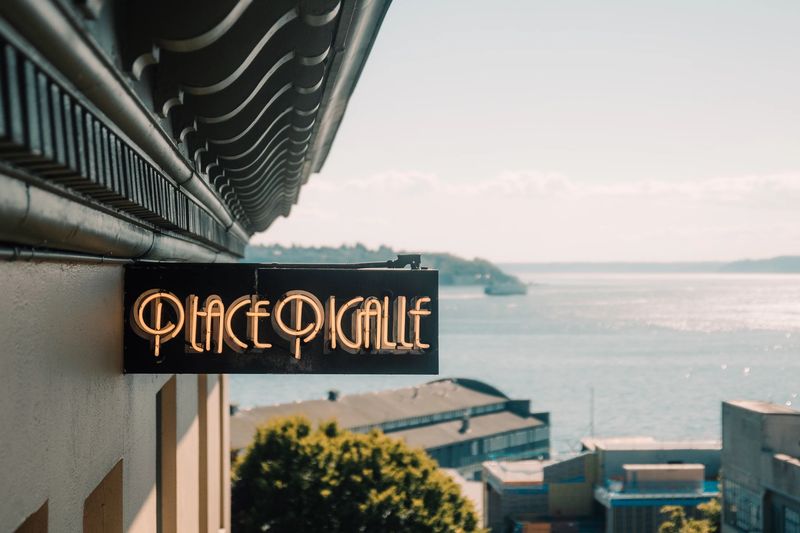
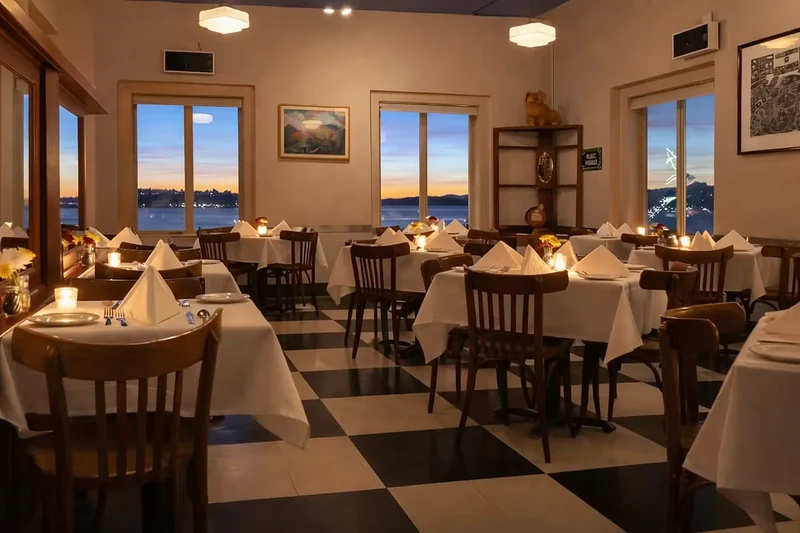
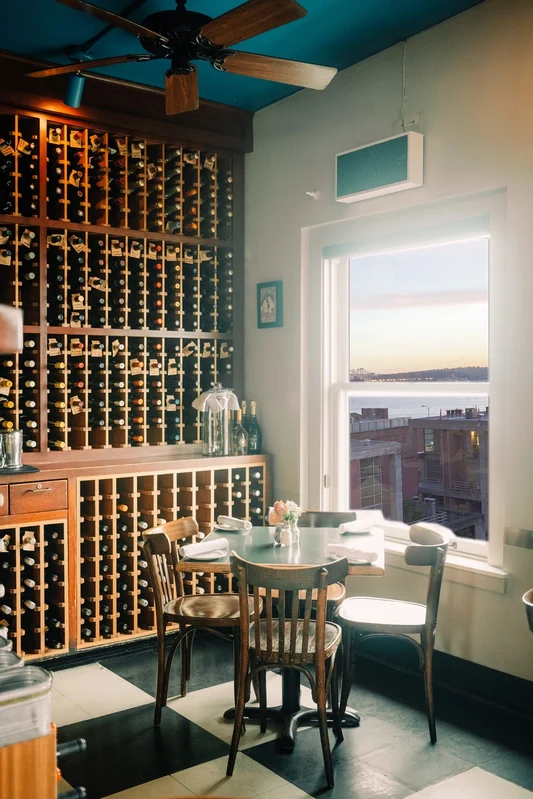
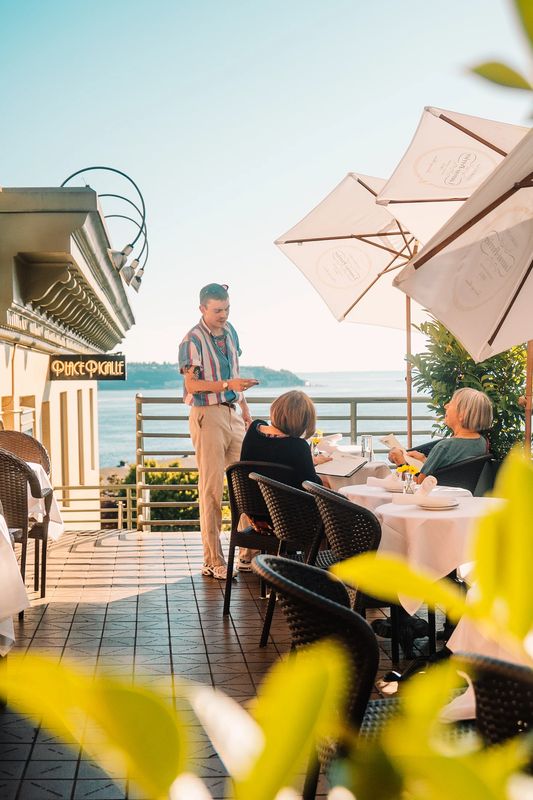
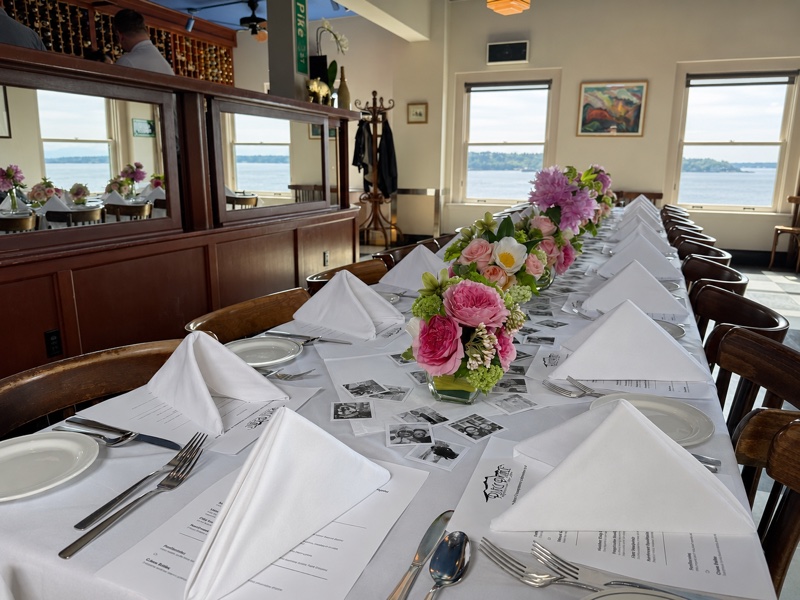
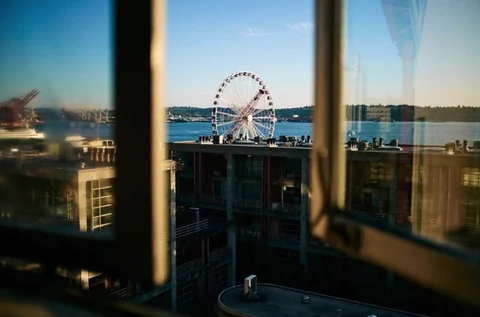
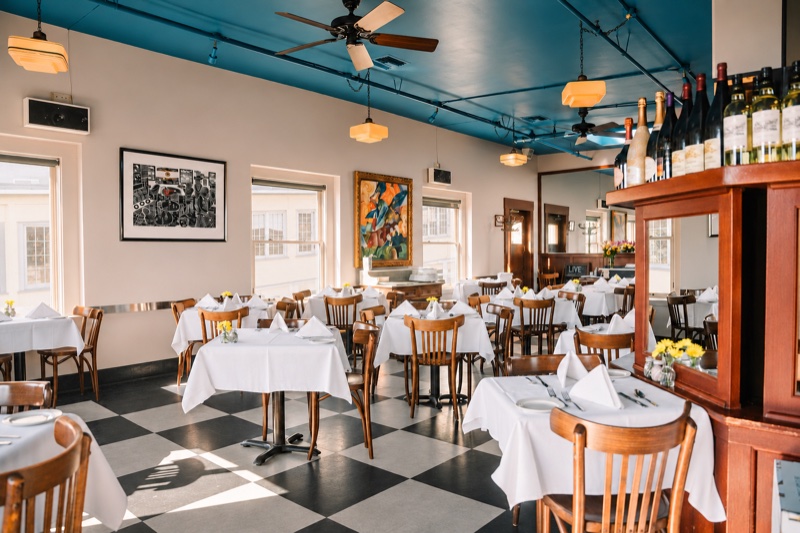
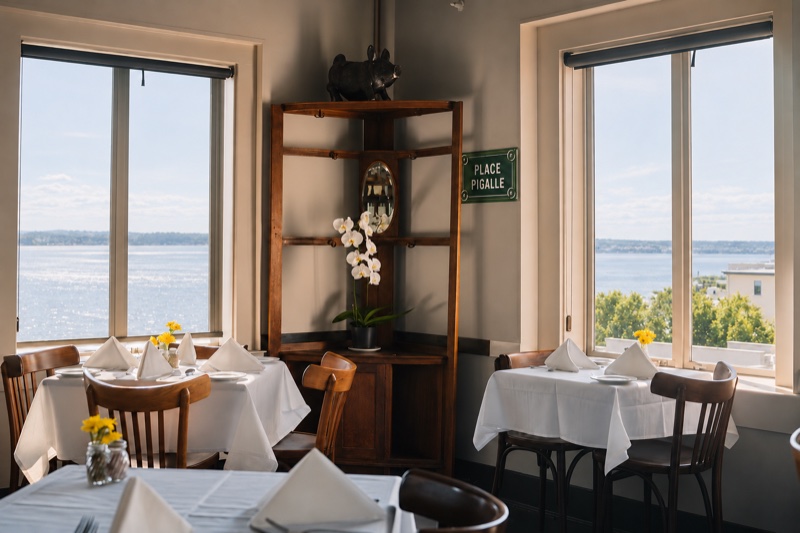
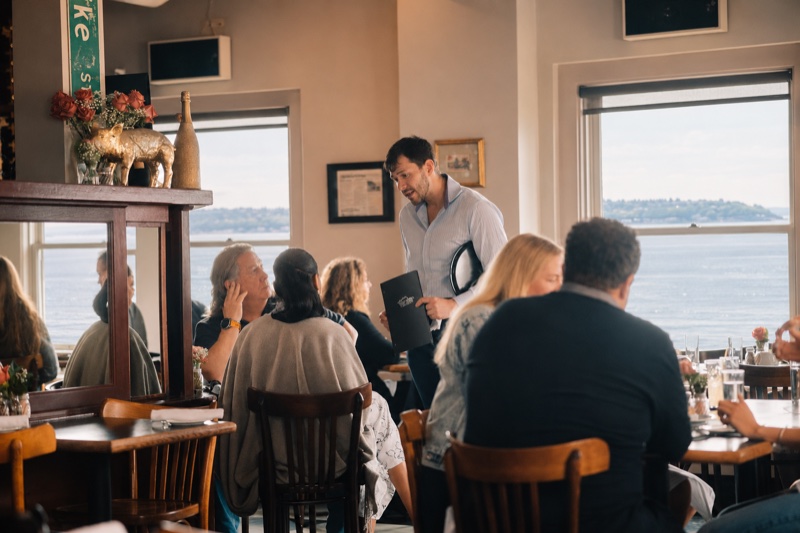
Place Pigalle has been a restaurant since 1981, in a room at Pike Place Market that was a hotel bar, a speakeasy and a blues tavern before that. It sits at the end of the hallway behind the fish market, with windows over Elliott Bay.
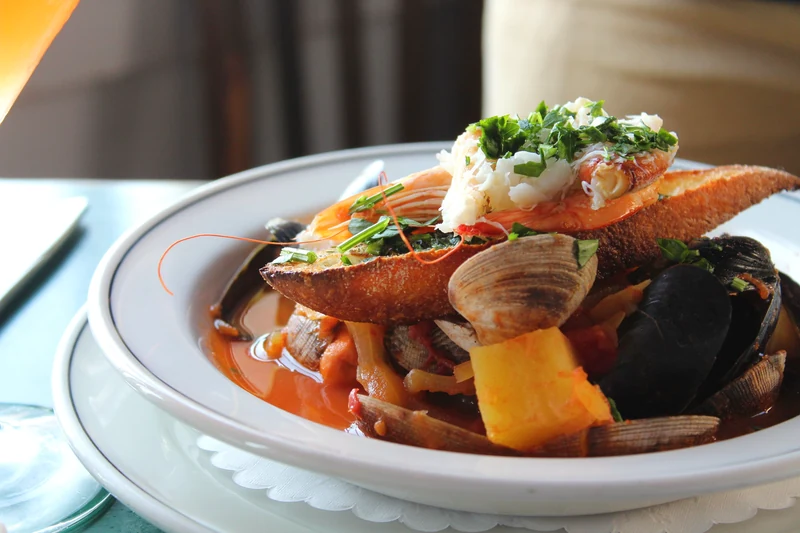
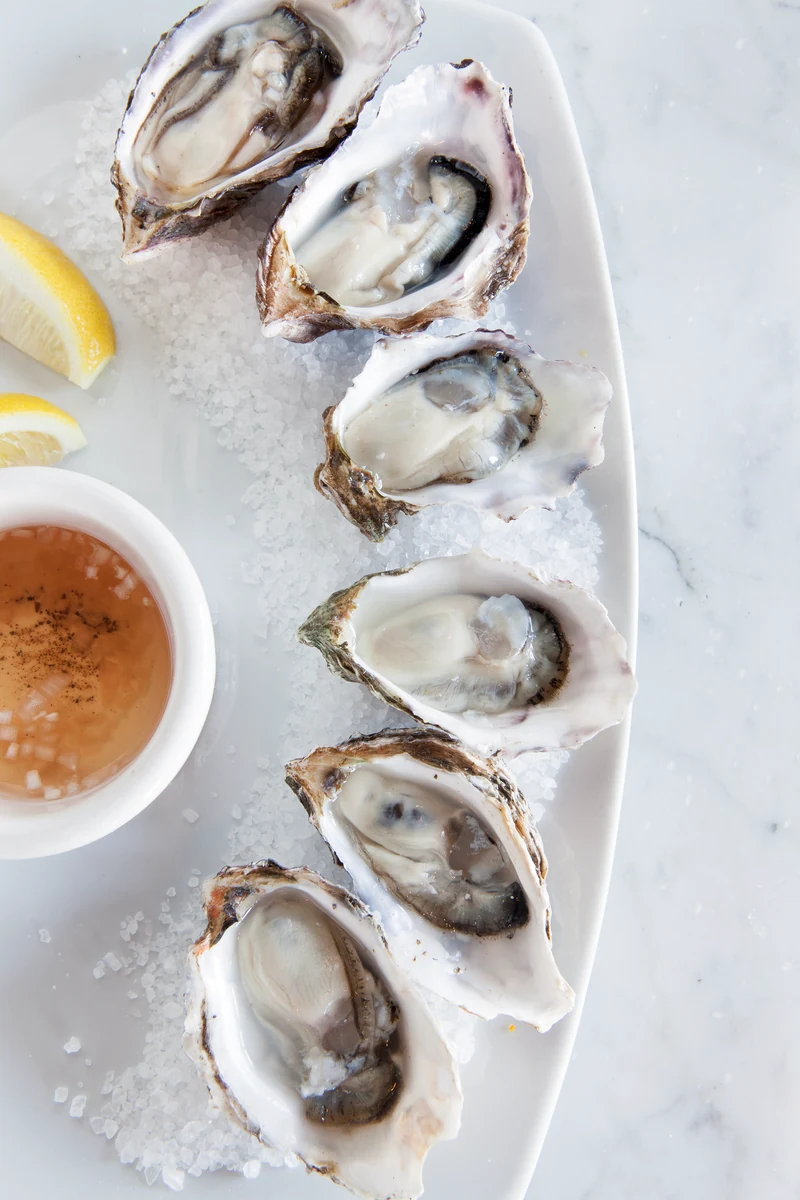
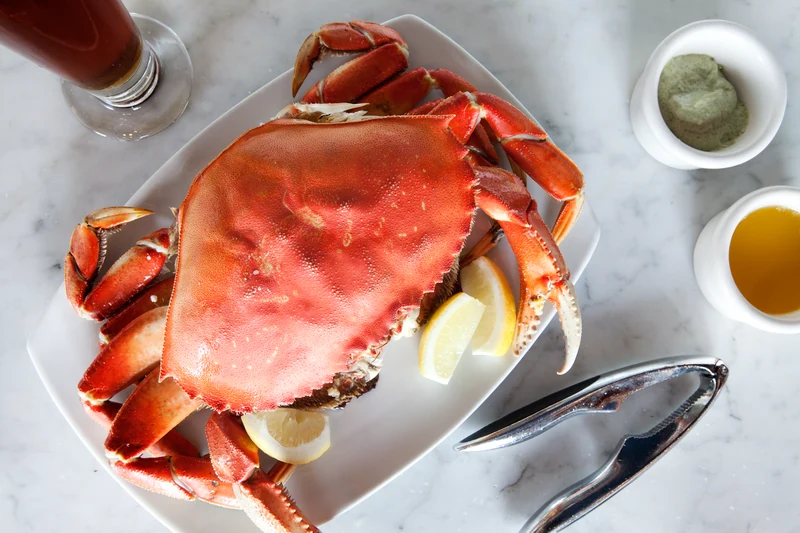
The cooking is French in method and Northwest in what goes on the plate: mussels, oysters, salmon, Dungeness crab, whatever the Market has. Bill Frank put white linen on the tables in 1982. The Walker family has kept it there since 2007.
A hotel bar from about 1901, a speakeasy, the bar beside a wartime brothel, a tavern called Pig Alley, a blues room, and since the early 1980s a restaurant with white tablecloths.
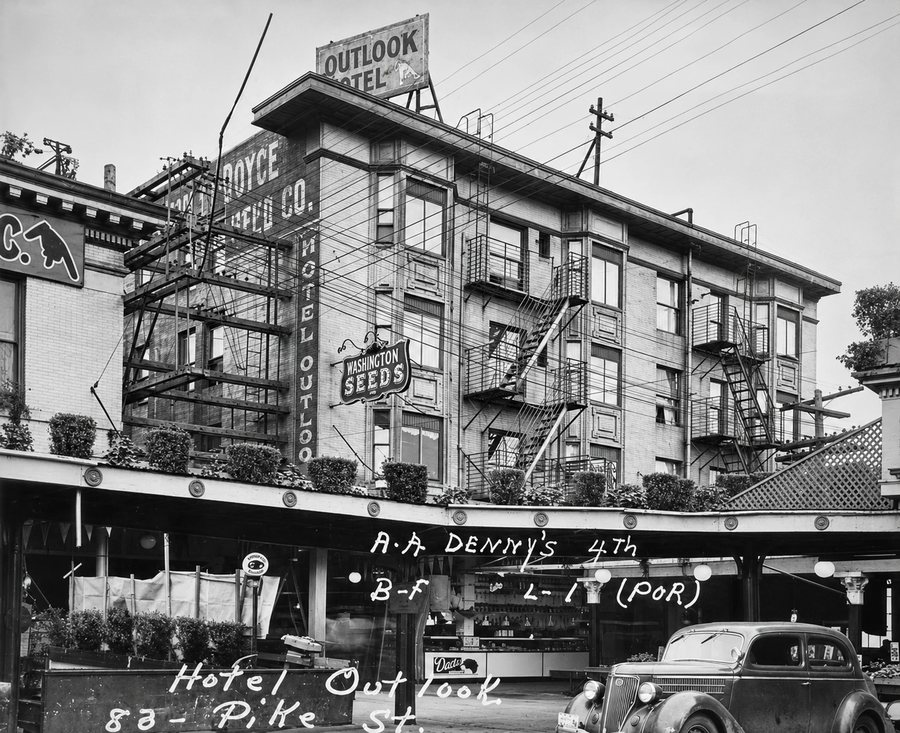
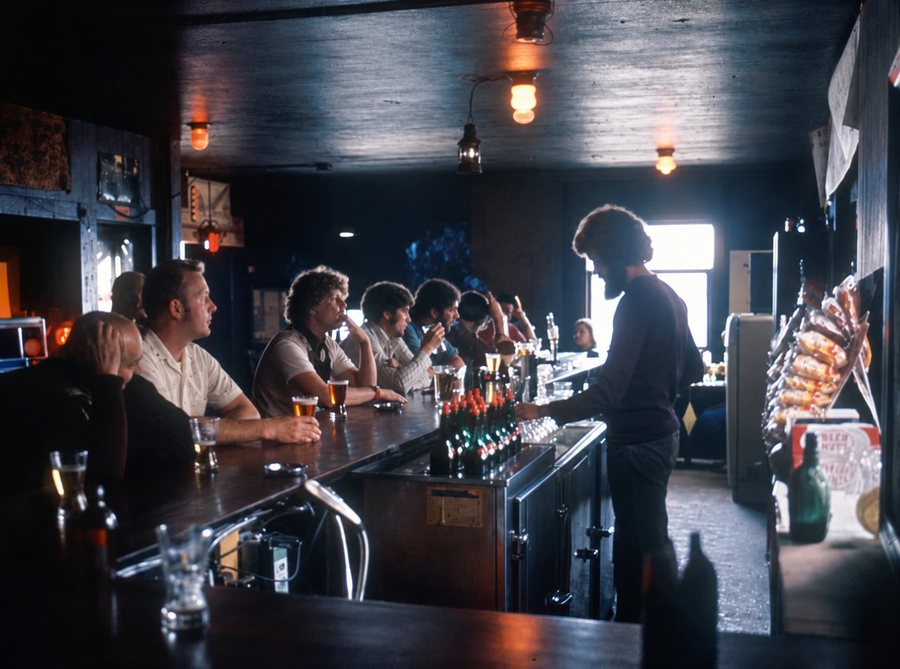
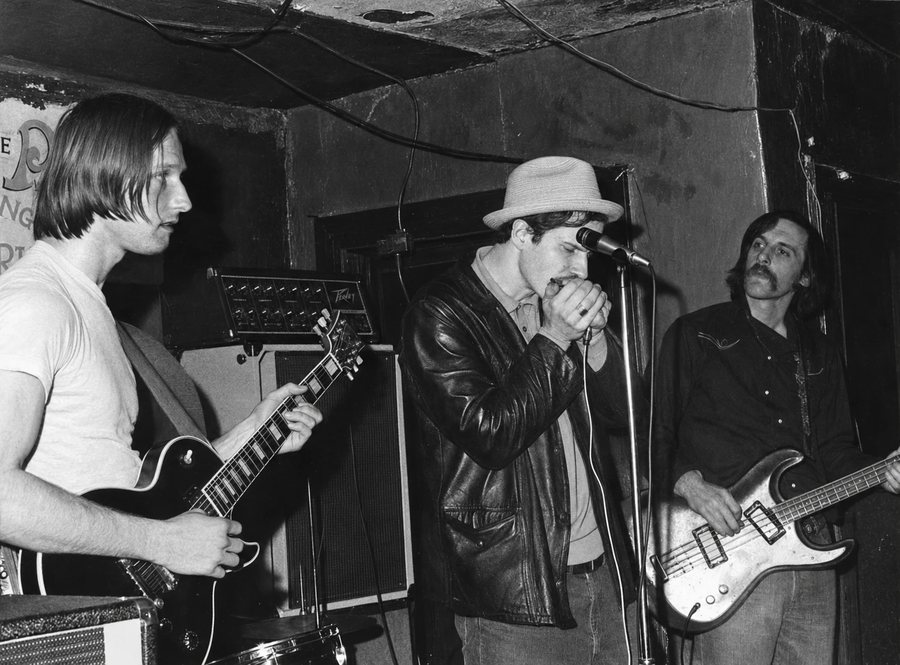
1937The Outlook Hotel at 83 Pike Street. Courtesy of the Seattle Municipal Archives, #32561. Digitally restored.Circa 1975Inside Pigalle Tavern. Courtesy of the Seattle Municipal Archives, #34868. Digitally restored.1974The Gray Blues Band at Place Pigalle. Photograph contributed by Mark Dalton. Digitally restored.
Photographs digitally restored. Credits and original scans are on the history page.
81 Pike Street, Pike Place Market Seattle, WA 98101
How to find us
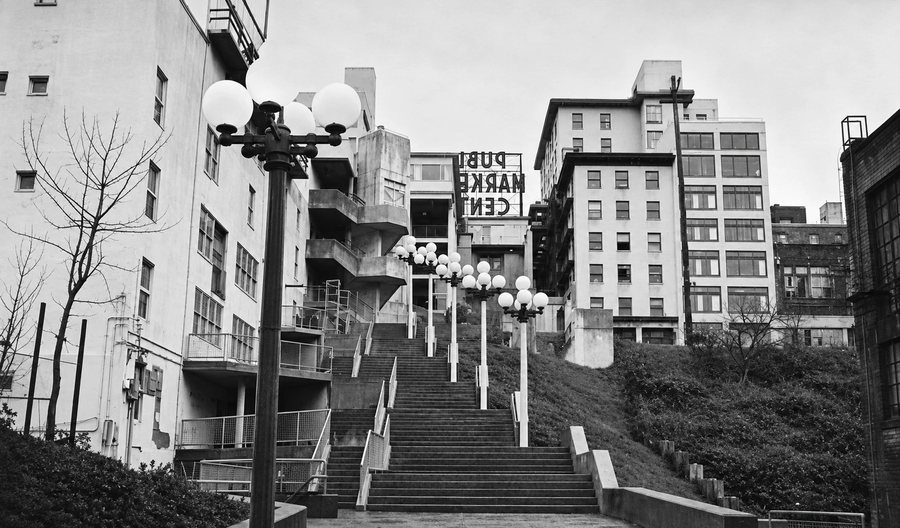
Follow the walk from the Public Market sign to our door.
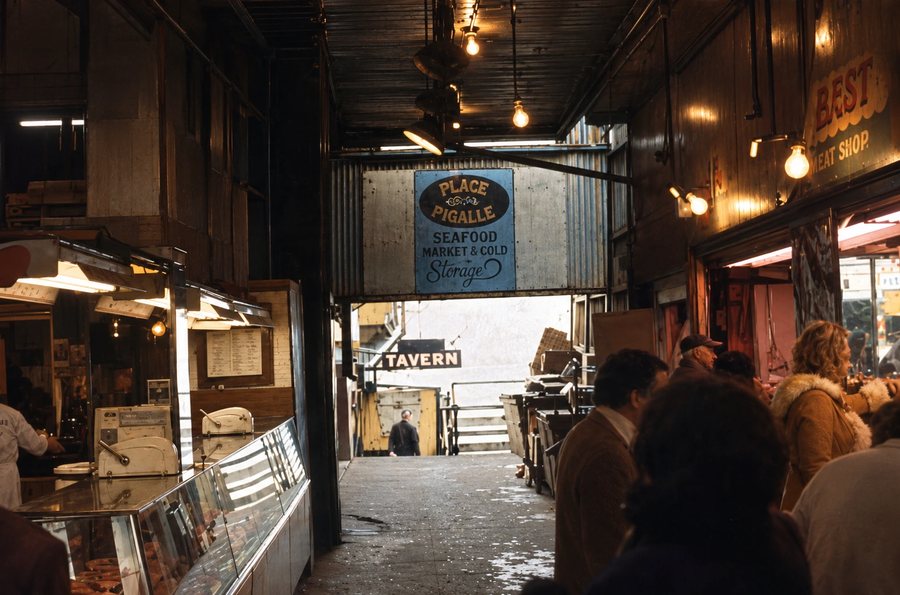
Start at the Public Market sign, walk past the fish stand, take the passage toward the water, and continue along the terrace to the Place Pigalle entrance.
The entrance requires six steps. There is no elevator or step-free entrance.
Hours
Lunch
11:30 am to 2:30 pm (last seating)
In-between menu
2:30 to 3:30 pm, most days
Dinner
From 5:00 pm
Last seating
8:15 pm Sunday to Thursday 9:00 pm Friday and Saturday
Bar
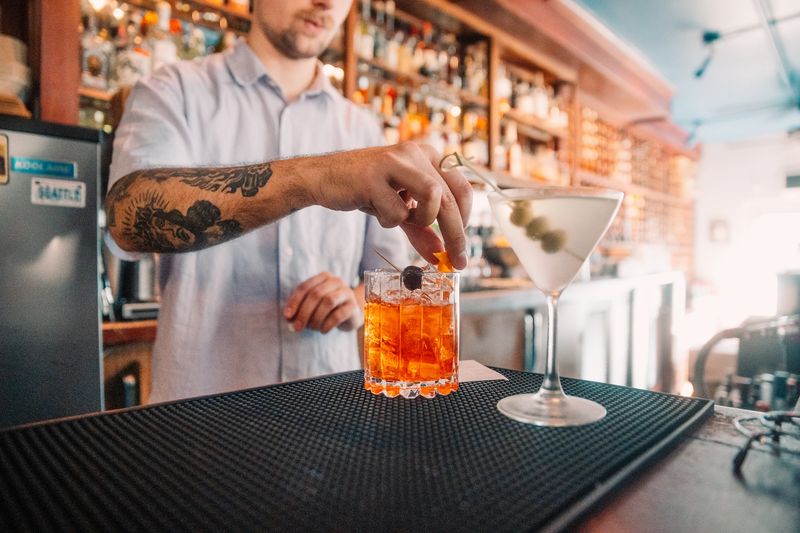
Open all day for drinks, including when the kitchen is closed between lunch and dinner
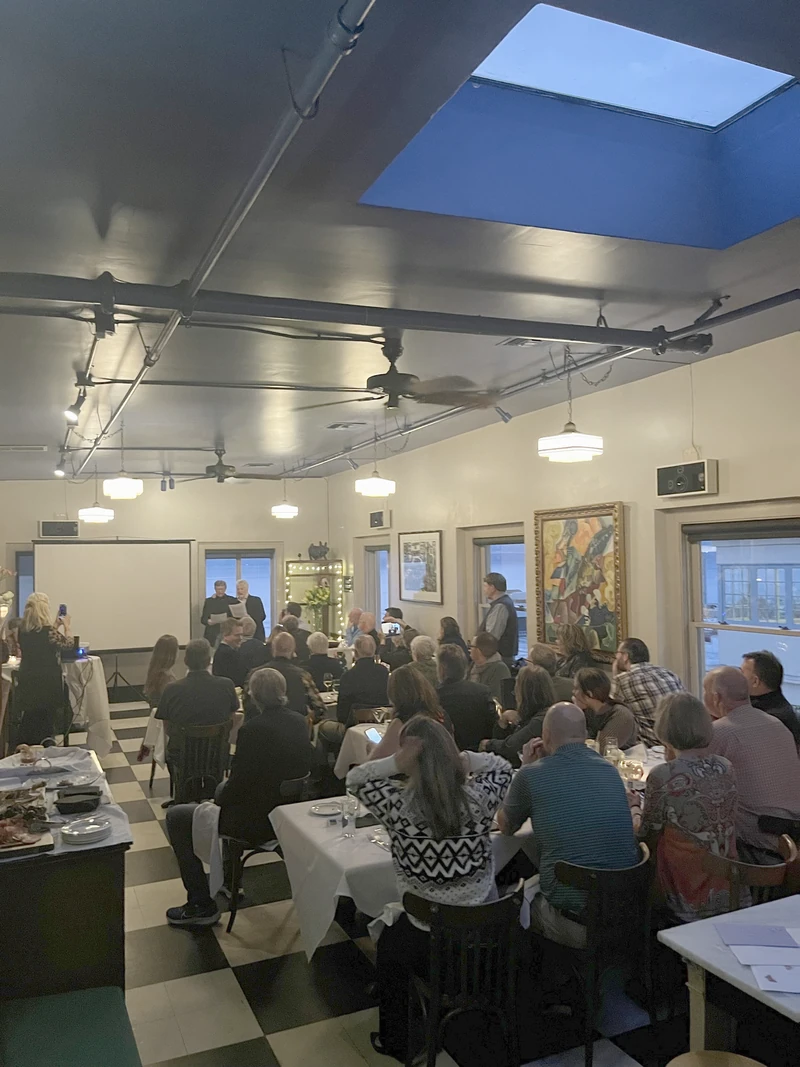
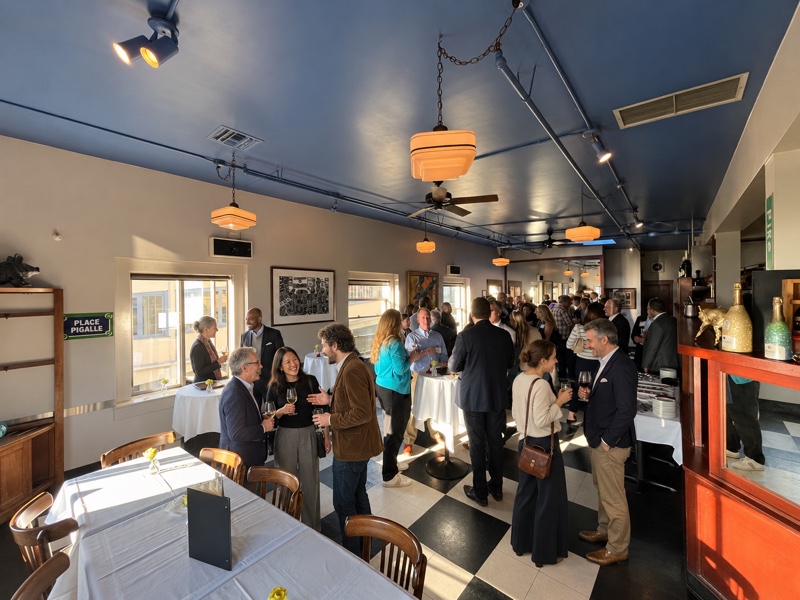
Exclusive use of the dining room and bar at Pike Place Market, with a seasonal menu written by the chef, wine from the list and a coordinator who runs the evening. In season the terrace over the water is yours as well.
“We had a wonderful time at Place Pigalle and everyone was raving over how amazing the service and food was. Your staff did an exceptional job and it was one of the best dinner events I’ve ever had.”
Rachel Johnson, DWS
“We had our wedding there and it could not have been any more of an excellent experience. … It felt like the best of hugs.”
Cindy Mulliken, wedding host
“The group had a WONDERFUL time at dinner. The food, the location, and the staff were amazing.”
Mary Nguyen, Pfizer
“The staff really went above and beyond to keep everyone served and happy today. Not one thing needed to be different.”
Jared Auckland, Lane Powell
“The team absolutely LOVED Place Pigalle: the ambiance, the food, and the spectacular service!”
Leslie Hart, Zillow
“Your restaurant is wonderful. The food is absolutely delicious and the service is amazing. It is perfect for our group…”
Heather Buckmaster, Merrill & Ring
“That was perfect. The food was great and the experience simple, elegant and comfortable”
Barbara Swift, Swift Company
“We received great feedback from our guests about the venue, food and service.”
Erin Rust, Fox Rothschild
“Everyone was thrilled with our event”
Cindy Dubé, Varsity Spirit
“We had such a great time! It was the perfect evening.”
Dvij Bajpai, wedding host
The space
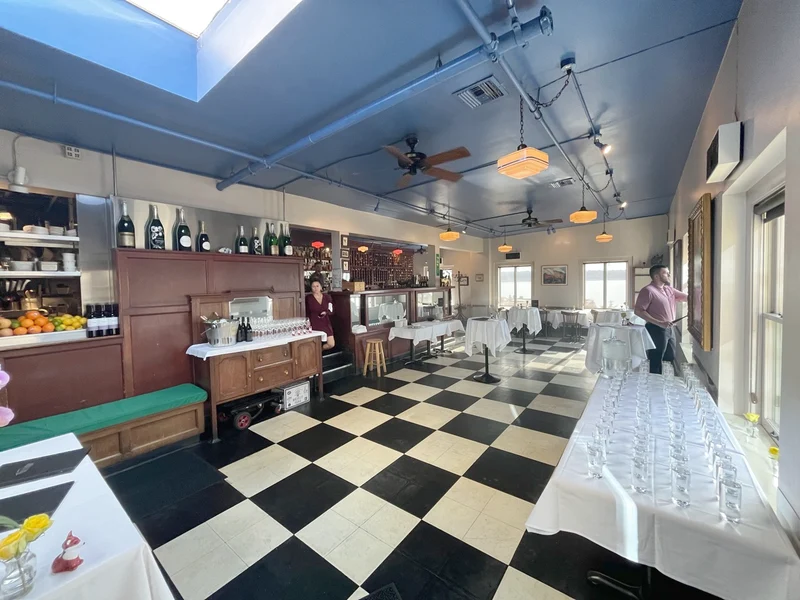
The dining room
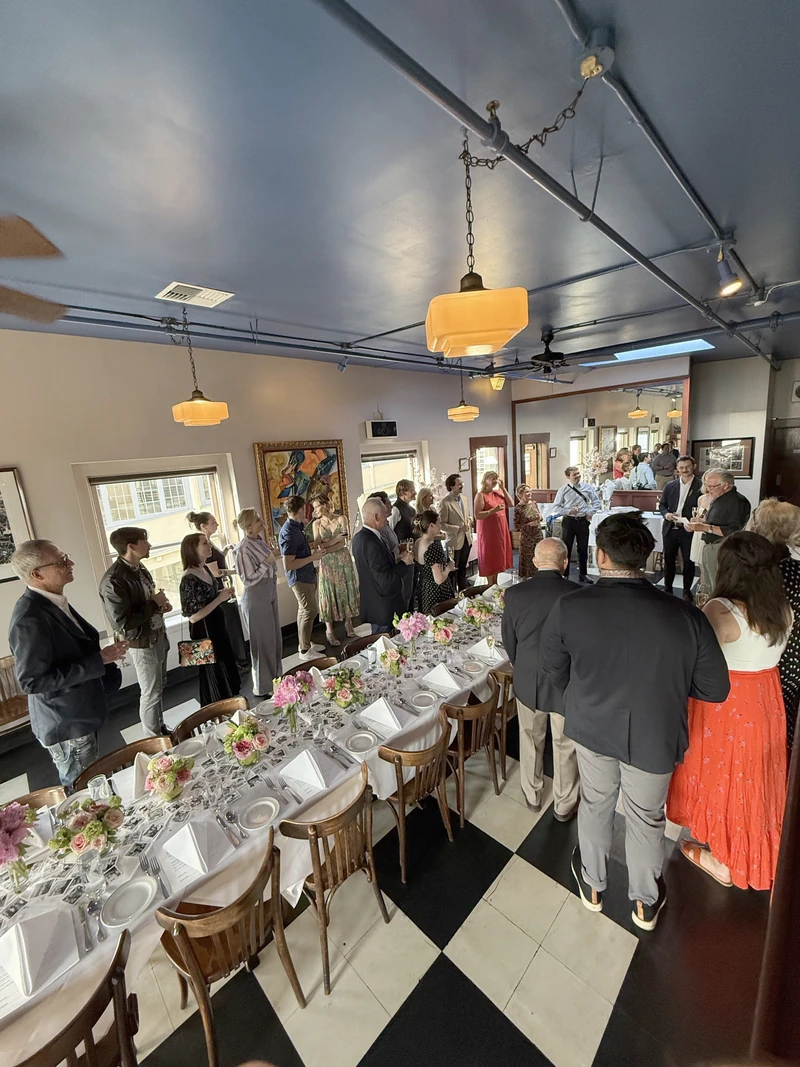
Long table, set for a private dinnerA toast at a private dinner · full photograph
One booking covers the whole place: the dining room and bar with their windows over Elliott Bay and, from late spring through early fall, the terrace above the water.
Seated dinner20 to 50Guests
Standing reception80 to 100Guests
The entrance requires six steps. We do not have an elevator or step-free entrance. Please call (206) 624-1756 with accessibility questions.
Pricing and booking
Starting at$150Per person
Typical range, all-in$7,500 to $14,000
Most clients book two to four months ahead. Holiday dates go fastest.
A physical card, mailed within the United States to the person you choose. It can be used for dining and drinks at Place Pigalle, and it does not expire.
The $1.00 mailing charge is already included in the total above. Checkout shows the same total.
Checkout is handled by Stripe. There you enter your name and email, the recipient’s name and mailing address, and a gift message if you would like to include one.
Gift cards are physical cards, mailed within the United States.
The building is older than the Market. What happened in it, and next door, has a lot to do with the name. The older photographs here are shown whole. Most are digital restorations made for this site, and fine detail in a restoration may be reconstructed. Each restoration can be switched to its original scan and keeps the date of the original photograph.
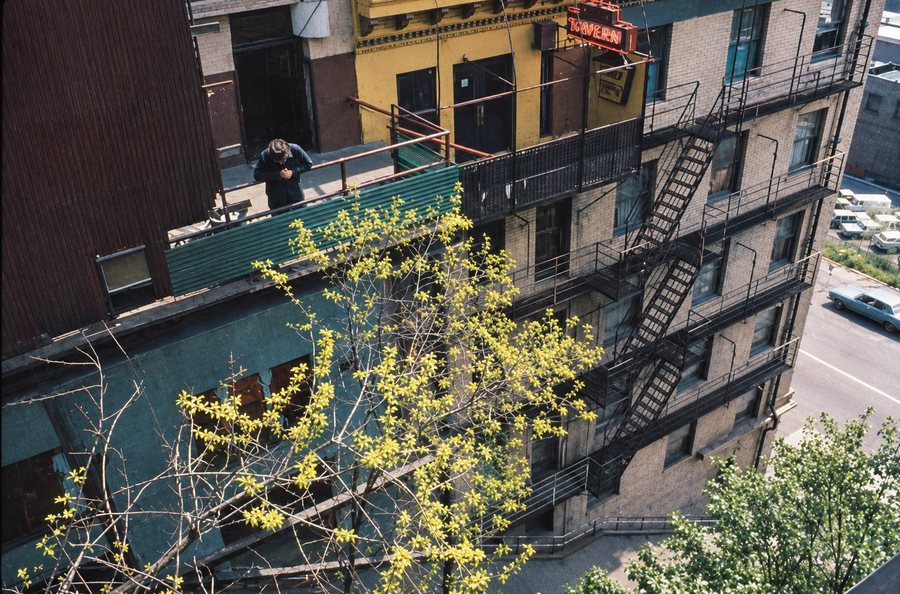
Circa 1975The Cliff House north wall and staircase, seen from above. Courtesy of the Seattle Municipal Archives, #34865.Circa 1977The Pike Street Hillclimb beside the building, after its construction, looking east. Courtesy of the Seattle Municipal Archives, #32482.
Around 1901
A hotel on the bluff, with a bar
The Cliff House Hotel went up around 1901, six stories over the waterfront, in a city swollen by the Klondike gold rush. Pike Place Market did not open until 1907. The bar in the building was the Lotus Inn.
During Prohibition it is said to have kept pouring. The family that later owned the building told of a liquor compartment hidden under the floor.
1937The Outlook Hotel at 83 Pike Street, five years before it became the LaSalle. Courtesy of the Seattle Municipal Archives, #32561.
1942 to 1951
Nellie Curtis moves in next door
In 1942 the Kodama family, who ran the Outlook Hotel beside the Cliff House, were sent to an internment camp along with most of the Market’s Japanese American farmers. Nellie Curtis, a madam with several aliases, took over their lease and renamed the hotel the LaSalle.
Sailors climbed the stairs from Western Avenue under the red light of the Market sign, and a good many stopped at the Lotus Inn first. She sold in 1951. The next owners hung a sign on the door that read No Girls.
Seattle Met: bathed in a telltale red glow
Her calling card: Friends Made Easily
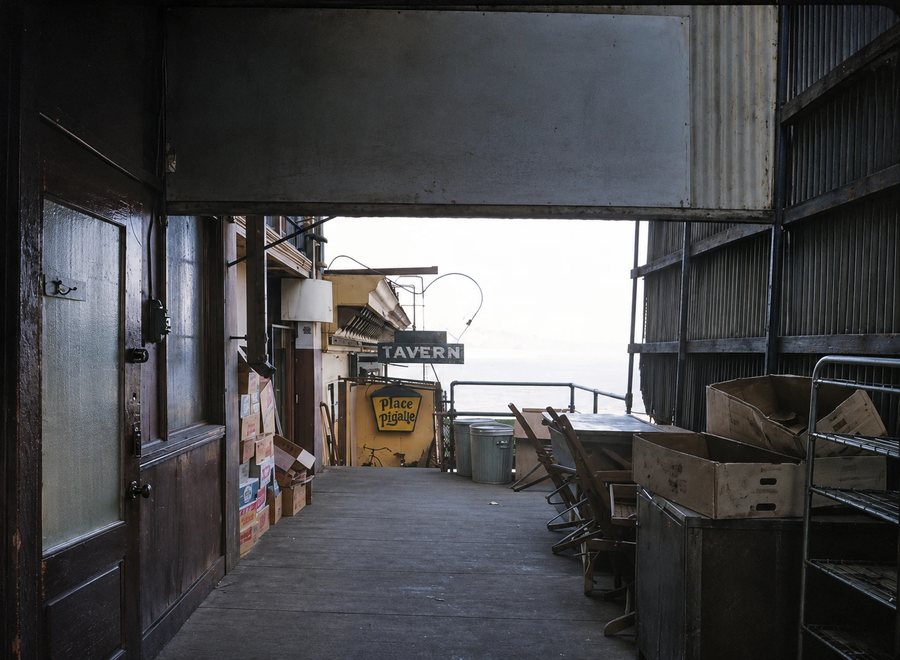
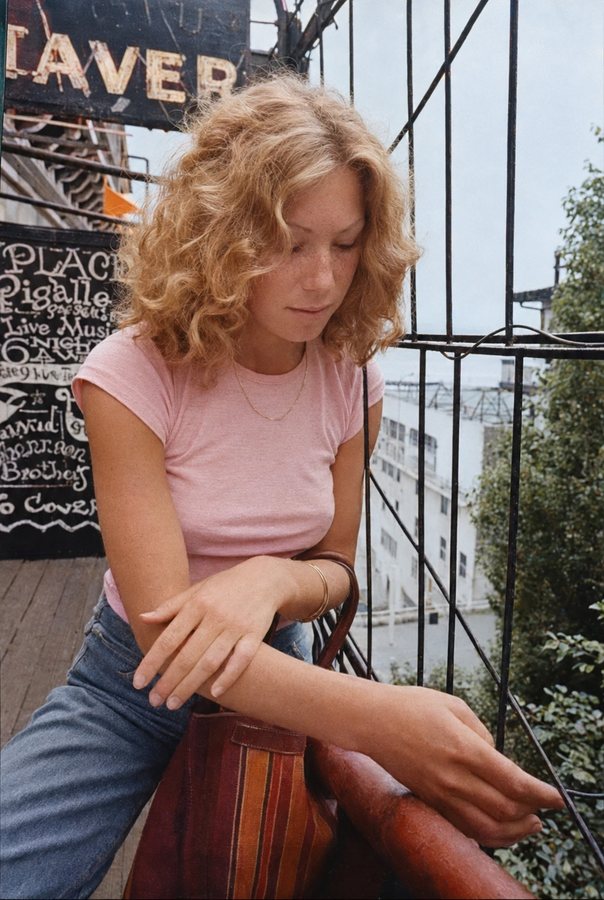
Circa 1975The Market breezeway toward the west courtyard, with the tavern sign at the far end. Courtesy of the Seattle Municipal Archives, #34873.June 1972Looking west through the Main Market breezeway, toward the tavern and the water. Courtesy of the Seattle Municipal Archives, #36198.Date unknownA portrait beside the Place Pigalle entrance. Place Pigalle collection; photographer and sitter not established.
1951
The Lotus Inn becomes Place Pigalle
Dorothy Horne bought the bar in 1951 and named it after the square in Paris’s red-light district, the one Allied soldiers called Pig Alley. Seattle called the tavern that too.
It had a sawdust floor and a jukebox that ran from Edith Piaf to Jimi Hendrix. Regulars were known to send empty bottles out the west windows.
A Seattle Lexicon, on the nickname: always meant it as a term of affection
1974The Gray Blues Band at Place Pigalle: Jerry Christie, Don “Junior Earl” McNeff and Keith Duncan, left to right. Photograph contributed by Mark Dalton; published in Jet City Blues.Circa 1975Inside Pigalle Tavern. Courtesy of the Seattle Municipal Archives, #34868.
1971
The Market is saved, and the Pig gets loud
In 1971, the year the city voted to save the Market, Gary Ward bought the tavern and made it one of two rooms in town that booked blues bands regularly. Guitarist Isaac Scott held the house gig, on a platform against the back wall, with a wood stove for heat.
One night in August 1975 a visiting harmonica player sat in for a few songs. It was Kim Wilson. On another night a customer threw a keg out the window.
PNW Bands: the nastiest, hippest, blues bar in the 1970’s
Kim Field, who played there: a classic waterfront dive
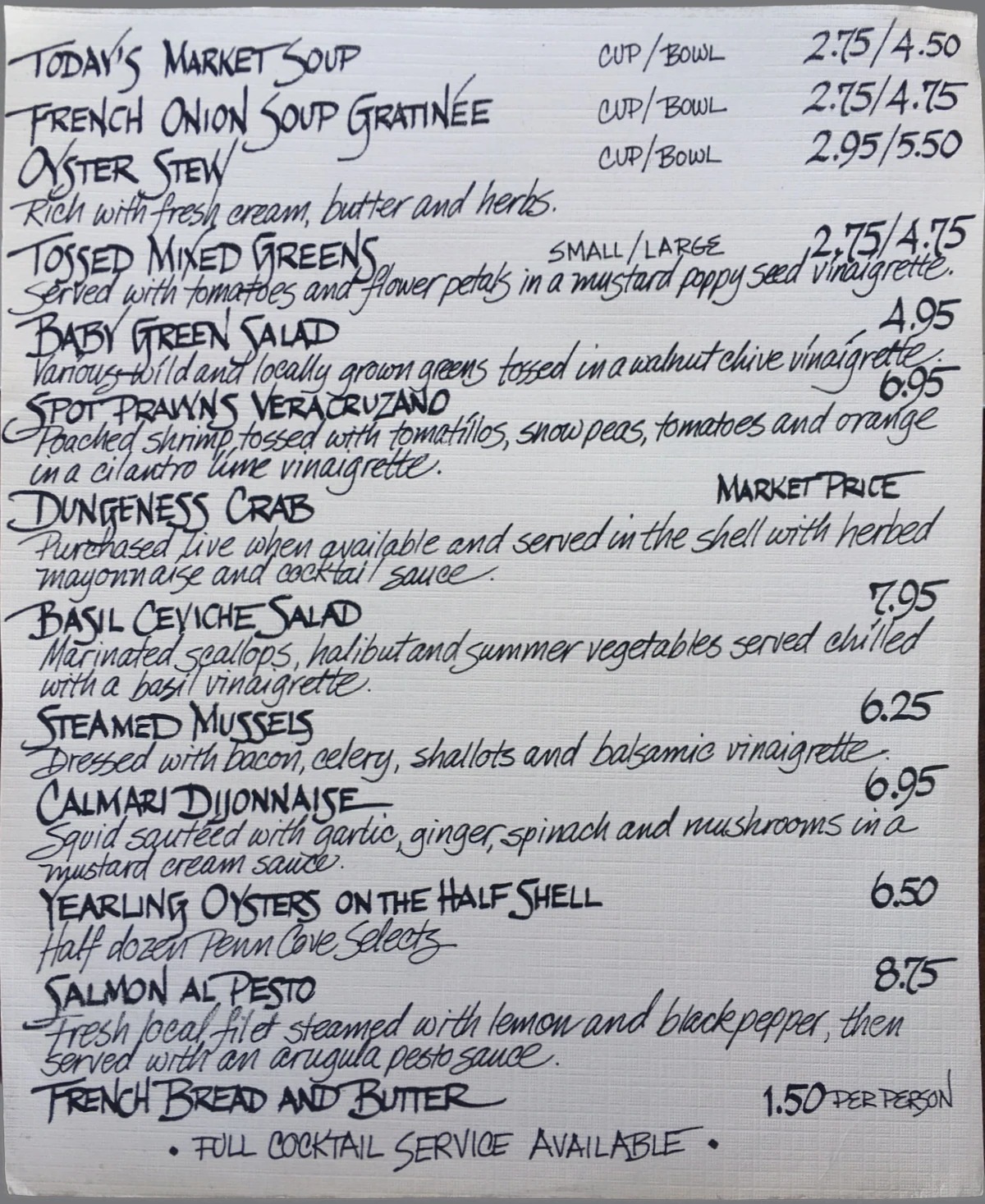
Circa 1981Handwritten Place Pigalle menu. Place Pigalle collection.
1977 to 1982
White tablecloths
The Market’s renovation shut the tavern in 1977. Gary Ward rebuilt the room and reopened it serving food from the stalls outside. In 1982 he sold to his bartender, Bill Frank, who pulled out the electric range, put in a real kitchen, laid white linen and wrote a menu that changed with the season.
He wrote it by hand. Steamed mussels were 6.25, Calamari Dijonnaise 6.95, and half a dozen Penn Cove oysters 6.50.
The Seattle Times, 2001: its sexy little bar (an imbiber’s paradise)
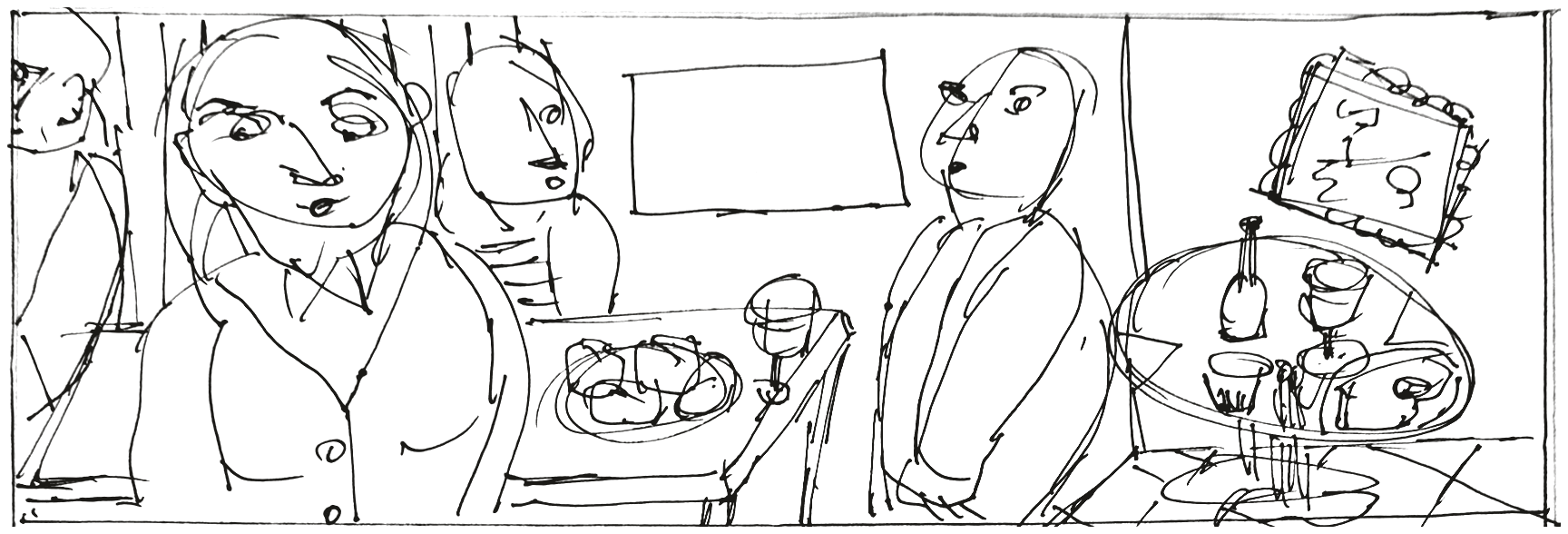
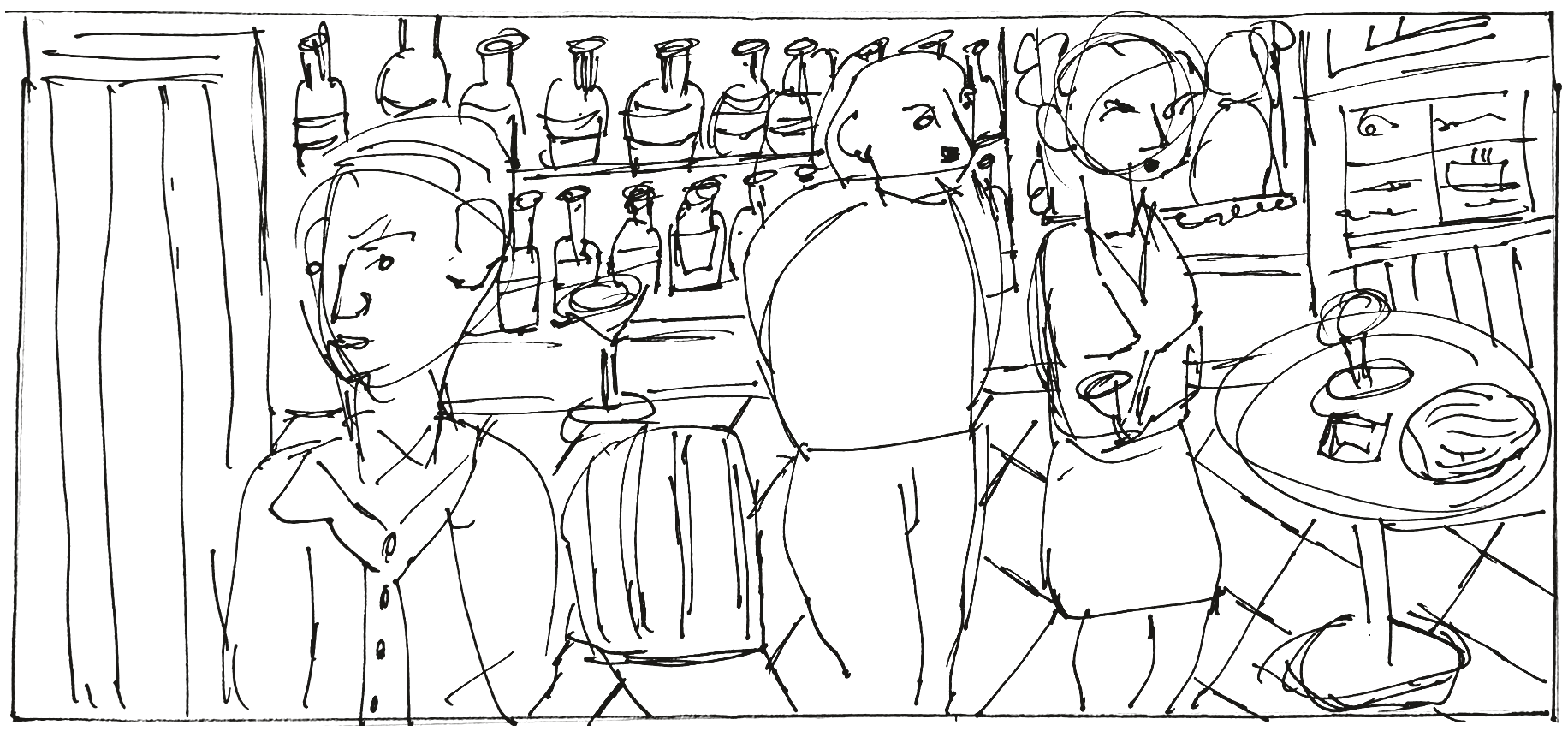
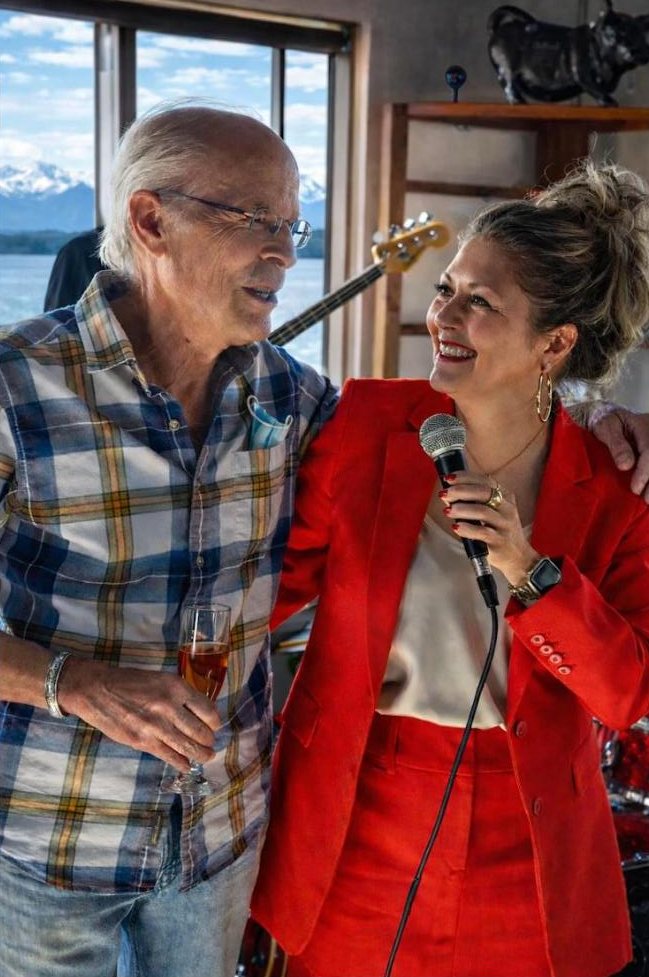
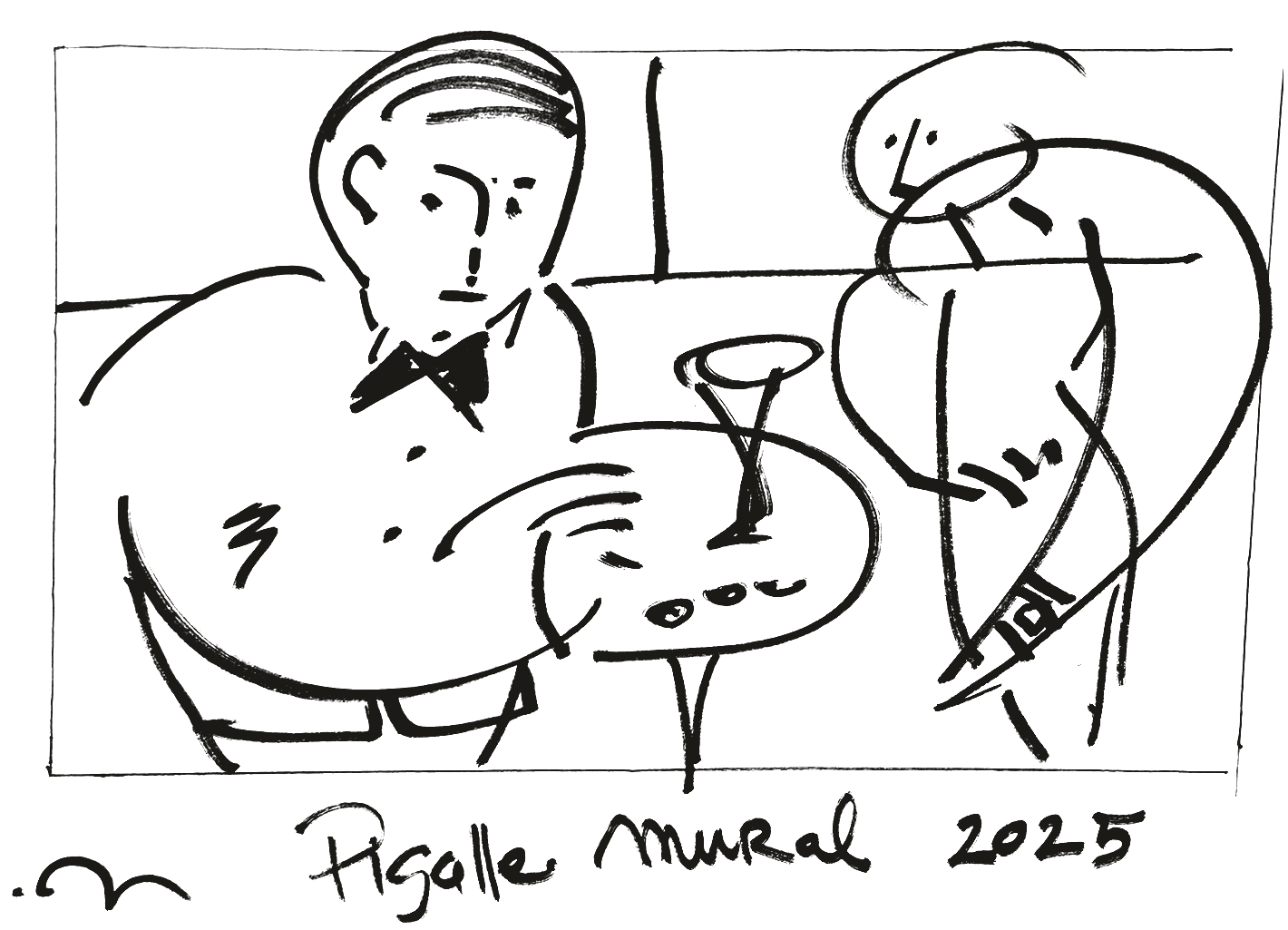
Circa 2010Bill Frank and Lluvia Walker.2025Study for a mural planned for Place Pigalle and never painted. Drawing by Billy King.
2007 to today
The Walker family
Bill Frank ran the room for twenty-five years, then retired in 2007 and handed it to the Walker family. Mussels Pigalle and Calamari Dijonnaise are still on the menu, and the rest still follows the season.